If you live with knee osteoarthritis, the first twenty minutes of the morning are the worst part of the day. The joint is stiff, the fluid has not yet warmed up, the surrounding muscles are still sleepy, and the first few steps to the bathroom feel like walking on something that does not quite belong to you. Most patients solve this by simply pushing through it — and most patients pay for that choice by lunchtime.
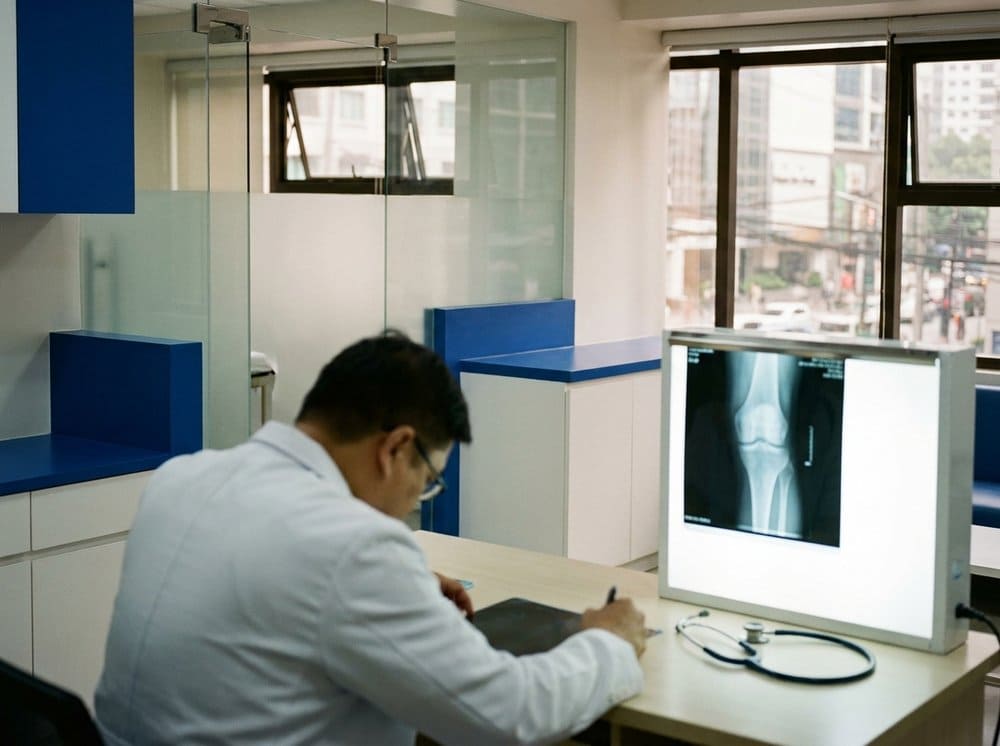
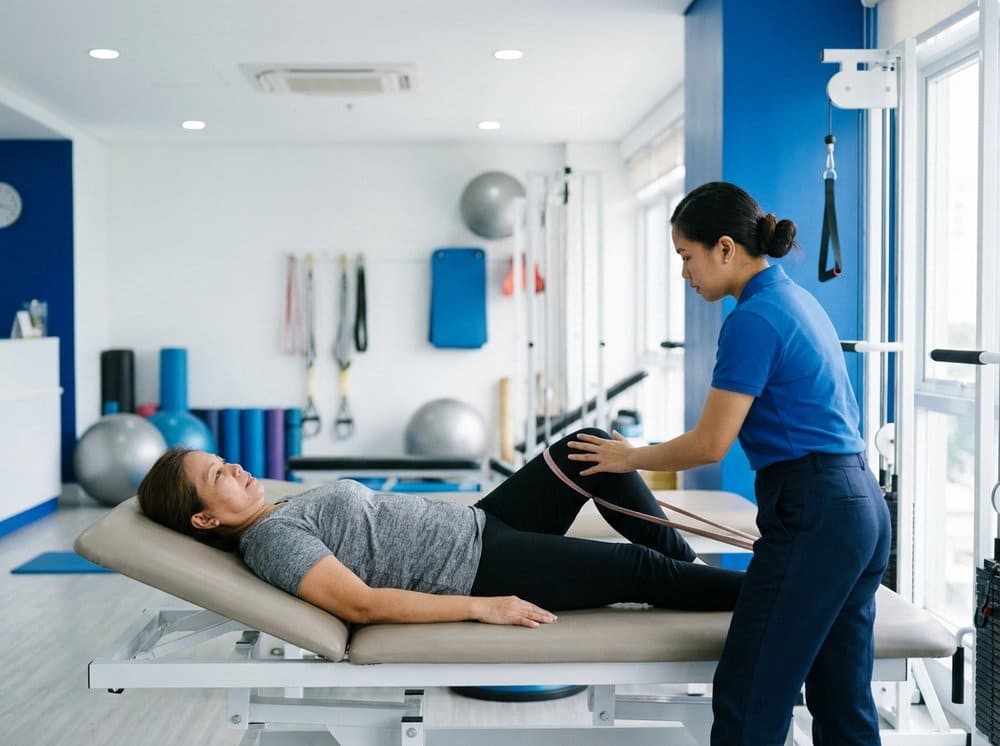
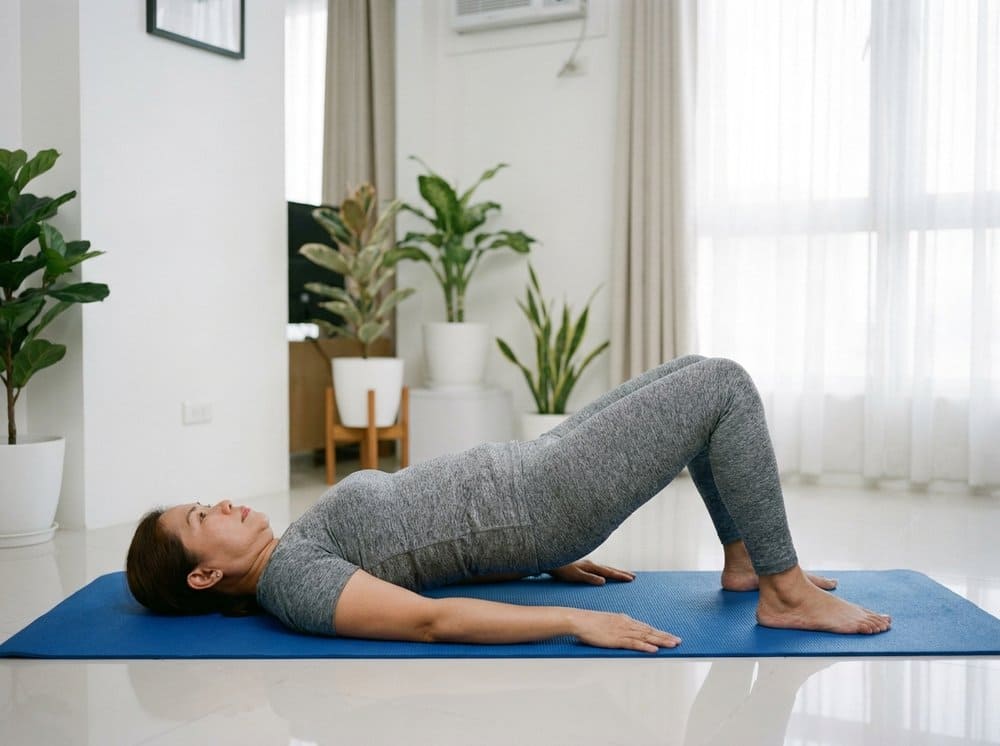
A better habit is a short, daily, deliberate movement programme done before the day's demands begin. The goal is not strength in the gym sense; it is to warm the synovial fluid, recruit the quadriceps, and restore the small amount of range of motion that stiffens overnight. The five exercises below are what we give to almost every Grade I–III patient on their first visit — whether they are starting our physical rehabilitation programme or managing independently between specialist reviews. They are the same movements we walk new patients through in the clinic gym, adapted for a chair and a wall at home. Before you start, please read our guide on reading a knee X-ray so you understand which grade you are in — the form cues below are appropriate for Grades I–III, not for acute flares or very advanced disease.
Before you begin
- Warm the knee first. Three minutes of gentle walking around the house, or a warm shower, is enough.
- Use a sturdy dining chair — not a dining stool and not an office chair on wheels.
- Wear shoes with support. Doing this in tsinelas on a tiled floor is how people slip.
- Pain level: aim for a 2/10 to 3/10 discomfort during the movement. If you are pushing past 5/10, the exercise is not helping — it is provoking a flare.
Exercise 1 — Seated Knee Extension (20 repetitions per leg)
Sit tall on your chair, both feet flat on the floor, hands resting on your thighs. Slowly straighten one knee until the leg is parallel to the floor. Pause at the top for two seconds, feeling the quadriceps muscle above the knee contract firmly. Lower the foot back to the floor over a slow three-count. That is one repetition. Complete twenty, then switch legs.
Form cues. The foot should rise slowly, not swing. If your knee clicks a little at the top, that is normal patellar tracking and not a reason to stop. Progression: after two weeks of comfortable twenties, add a 0.5 kg ankle weight.
Exercise 2 — Heel Slides (15 repetitions per leg)
Still seated, slide one foot forward along the floor until the leg is almost straight, then slide it back toward the chair until your heel is as close to the chair leg as you comfortably can. The movement should be smooth and continuous, not a jerky pull. This is a range-of-motion exercise, not a strength exercise — the point is to work the joint through its full available arc.
Form cues. Use a slippery floor (tile with a sock works) to reduce friction. Do not force the knee to bend further than it wants; the range improves gradually over weeks.
Exercise 3 — Mini Squats to a Chair (10 repetitions)
Stand in front of your chair with feet shoulder-width apart, hands on hips or out in front for balance. Slowly lower yourself as if you were about to sit, but stop just before your backside touches the seat — hover for a beat — then stand back up. The chair is a safety net, not a rest stop.
Form cues. Knees should track over the middle of the foot, not fall inward. Do not let the knees travel forward past the toes. If you cannot rise without using your hands, raise the chair height with a firm cushion. Progression: remove the cushion, then move to a lower chair.
Exercise 4 — Quad Sets (10 holds × 10 seconds each)
Sit on the edge of the chair with both feet flat. Straighten one leg out in front of you, heel on the floor. Press the back of the knee down toward the floor — you will feel the quadriceps muscle on the front of the thigh contract hard. Hold that contraction for a slow count of ten, then release. Ten holds per leg.
Form cues. This exercise looks like nothing is happening from the outside. It is the single most important exercise in the set — the vastus medialis is the muscle that stabilises the kneecap, and isometric holds are the safest way to strengthen it when the joint is irritable.
Exercise 5 — Standing Calf Raise (15 repetitions)
Stand behind your chair with both hands lightly resting on the backrest for balance. Rise up onto the balls of both feet, pause for one second at the top, then lower slowly under control. The calves are the knee's quiet assistants — strong gastrocnemius and soleus muscles absorb shock that would otherwise travel up into the joint.
Form cues. Keep the rise symmetric; do not let one heel lift more than the other. Progression: single-leg calf raises after four weeks.
"The joint that is moved a little every day is the joint that does not tell you about itself when you are trying to sleep."
Timing, frequency, and progress
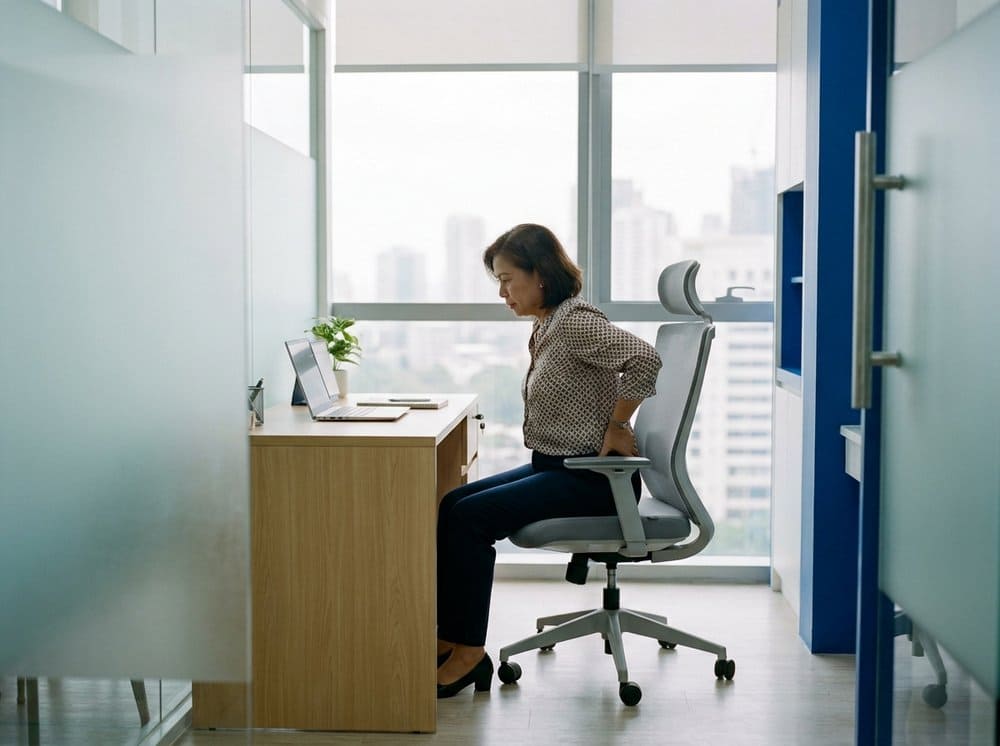
The whole routine takes ten to fifteen minutes. We ask patients to do it daily for the first six weeks, then six days a week thereafter. Monday mornings are not the day to skip — they are usually the hardest day because of the weekend's reduced movement, and the routine makes the biggest difference on exactly those days. Pair this with the desk posture guidance if you work office hours, because a cervical-spine problem and a knee problem often live in the same chair.
When to stop and seek review
The routine should leave your knee feeling more mobile, not more swollen. If you notice new swelling that lasts more than 24 hours after exercising, increased warmth or redness over the joint, or a sudden sharp pain that was not there before, pause the programme and book a review. For patients already in our rehabilitation programme, message your assigned PTRP — we can usually adjust the load before the next in-person session rather than waiting a full week.