Why 26 weeks, not 12
Earlier clinical protocols cleared patients for sport at 6 months post-op. Contemporary evidence — the MOON cohort, Delaware-Oslo cohort, and a decade of Scandinavian registry data — shows that re-rupture rates drop dramatically when return-to-sport is pushed to 9–12 months and gated by objective testing, not the calendar. At Myntrava we use the 26-week milestone as the earliest gateway to sport testing, not the finish line.
The graft itself needs time to biologically mature. A hamstring or bone-patellar-tendon-bone autograft undergoes a predictable sequence: necrosis at 4–6 weeks, revascularisation at 8–12 weeks, ligamentisation at 12–24 weeks. The knee that feels strong at month four is structurally weaker than the knee that feels ordinary at month six.
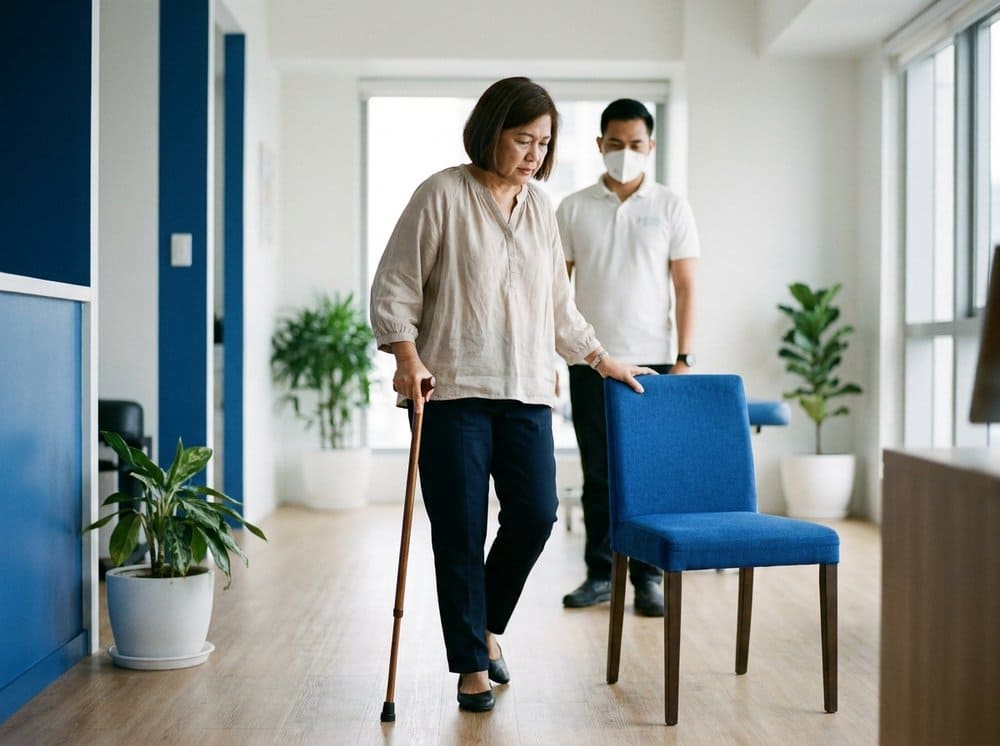
Phase 1 · Weeks 0–6: Protection & Range of Motion
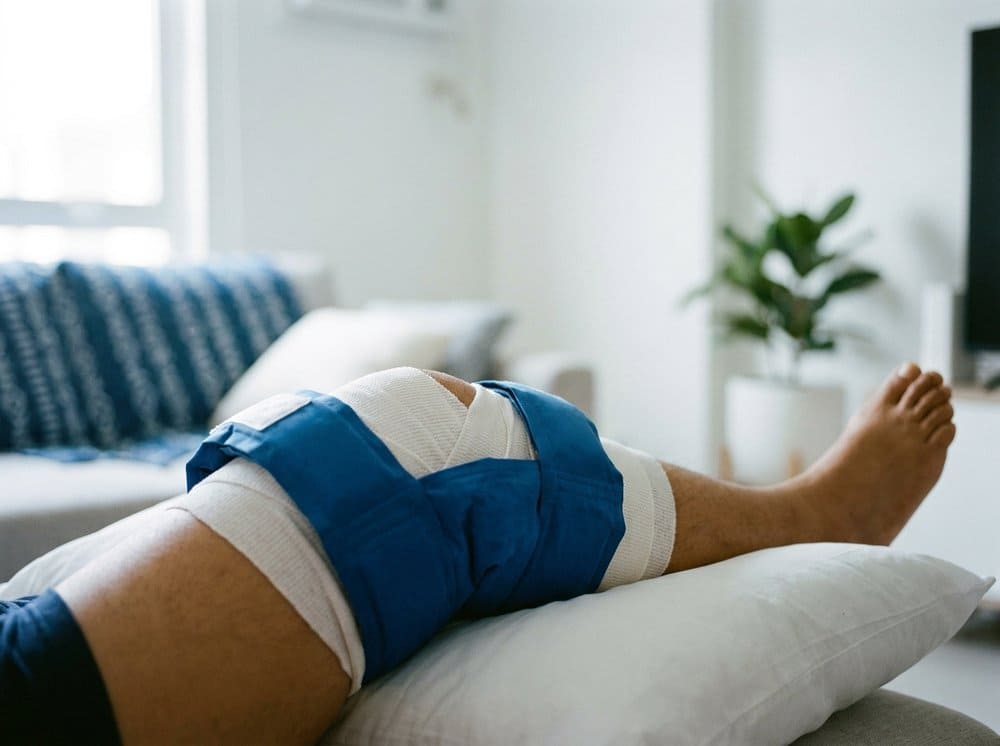
The first 48 hours after surgery mirror what we described in the first-week post-TKR piece: ice, elevation, quadriceps sets, and meticulous swelling control. The differences are the meniscal status (was a repair done? if yes, weight-bearing is restricted), the brace protocol, and the speed of early ROM.
Goals by end of week six:
- Full passive knee extension (the knee lies completely flat) — non-negotiable, this is the single most important Phase 1 target
- Knee flexion to at least 120°
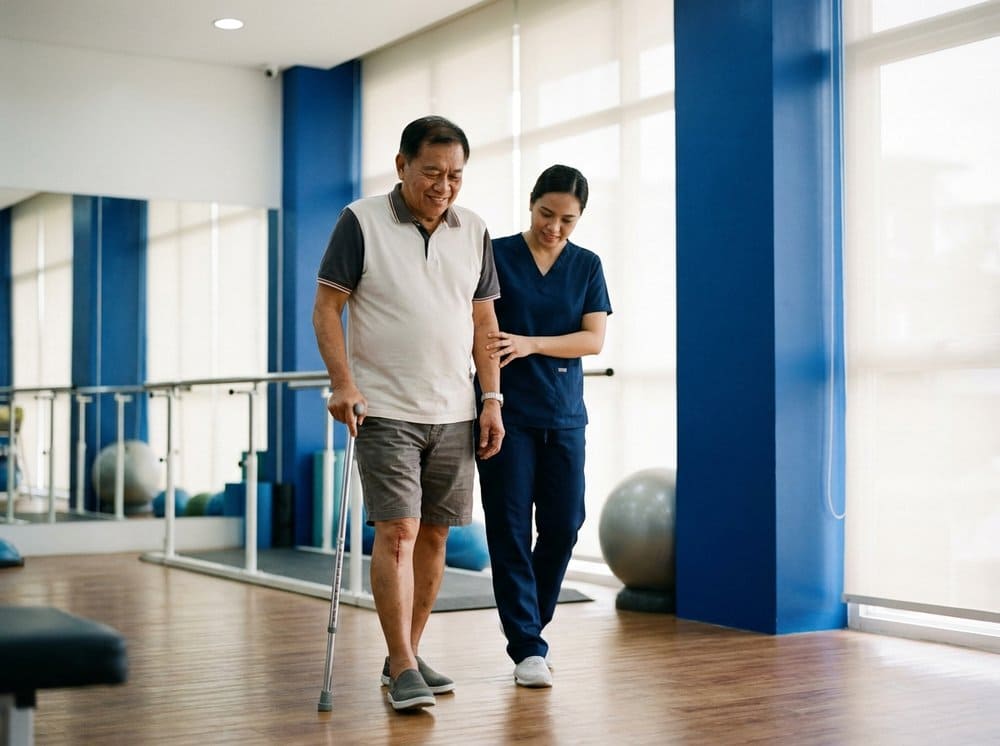
- Full weight-bearing without crutches
- Quadriceps activation with audible contraction and no lag on straight-leg raise
- Swelling graded as "trace" on the stroke test
Patients who arrive at week six without full extension usually lose it permanently. Extension loss above 5° is a predictor of anterior knee pain and graft failure. If you are stiff at the end of Phase 1, we manipulate under anaesthesia rather than let it ride.
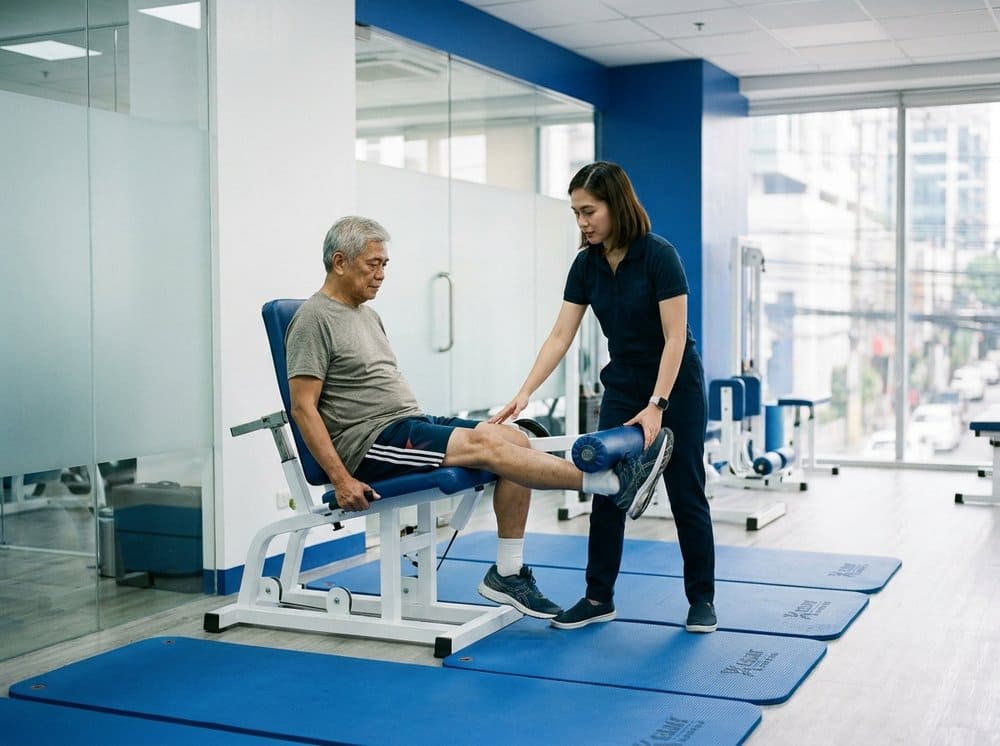
Phase 2 · Weeks 7–12: Strength
Once ROM and swelling are controlled, the focus shifts to rebuilding quadriceps and hamstring strength. Open and closed kinetic chain exercises are reintroduced in a graded sequence: leg press, wall squats, step-ups, single-leg bridges. Cycling on a stationary bike is usually comfortable by week eight, elliptical by week ten. Running is not yet allowed.
We measure progress objectively. By week 12 we want to see quadriceps strength at 70% of the uninjured side, measured on an isokinetic dynamometer where available, or with hand-held dynamometry in clinics without one. Hamstring strength should be at 80% — grafts harvested from the hamstring often recover hamstring strength faster than quad strength, which is counter-intuitive but consistent across the literature.
"The single biggest predictor of a successful ACL outcome is quadriceps strength symmetry at six months. Not the graft choice. Not the surgeon. Quad strength."
Phase 3 · Weeks 13–20: Sport-Specific Drills
Running typically begins around week 13 if the milestones above are met. We start with a structured return-to-run program: alternating walk-jog intervals, progressing to continuous running on a flat treadmill, then outdoor running, then change-of-direction drills. Plyometrics enter around week 16 — double-leg hops first, then single-leg, then lateral bounds, then depth jumps.
This is also when sport-specific work begins. A basketball player will not touch a ball with intent until week 16 at earliest; a footballer starts toe-taps and inside-foot passes at week 14; a runner starts interval work at week 15. For anyone returning to combat sport or contact play, this phase is where we are most conservative.
Phase 3 is often emotionally difficult. The knee feels "normal" for the first time since surgery, the pain is gone, and patients want to push. The graft at 20 weeks is not the graft at 52 weeks, and we have to hold the line.
Phase 4 · Weeks 21–26: Return-to-Sport Testing
No one is cleared for sport at Myntrava without passing a battery of objective tests. The standard we use:
- Quadriceps LSI ≥ 90% — limb symmetry index, operated vs non-operated side
- Hamstring LSI ≥ 90%
- Single-leg hop for distance LSI ≥ 90%
- Triple hop LSI ≥ 90%
- Crossover hop LSI ≥ 90%
- Y-balance test — anterior reach symmetry within 4 cm
- Knee Outcome Survey-Sports Activity Scale ≥ 90
Patients who pass all seven at 26 weeks are cleared for progressive return to training, not competition. Competition typically follows after another 4–8 weeks of graded exposure. Patients who fail any test are held and re-tested in four weeks. Our re-test pass rate at 30 weeks is about 85%.
The PH context
Most ACL tears we see in Makati are from basketball — it is the national injury. The second-largest group is recreational runners who caught a pothole, and the third is motorbike and scooter accidents along EDSA. Commute-dependent patients need to plan for 16 weeks of reliance on a driver or Grab, because driving is only allowed once quad strength reaches roughly 80% on the operated side (and is safe for emergency braking).
HMO coverage for ACL reconstruction varies. Maxicare and Medicard cover the surgery fully under most premium plans; physiotherapy is usually reimbursable for 12–16 sessions. Our 16-session post-surgery rehab program is structured to fit most HMO reimbursement schedules. For patients asking about shoulder surgery recovery, the rotator cuff phases piece covers that pathway. And if you are reading this while still deciding whether injection therapy might delay surgery, the desk posture and cervical spine piece is worth a detour for anyone with combined knee and neck pain.
What gets people through
ACL rehab is longer than most patients expect and harder than most patients prepare for. The ones who succeed share three habits: they do their home exercises every day without exception; they keep their physiotherapy appointments even when the knee feels fine; and they accept that calendar weeks matter as much as strength numbers. The graft needs time. Give it the full 26.