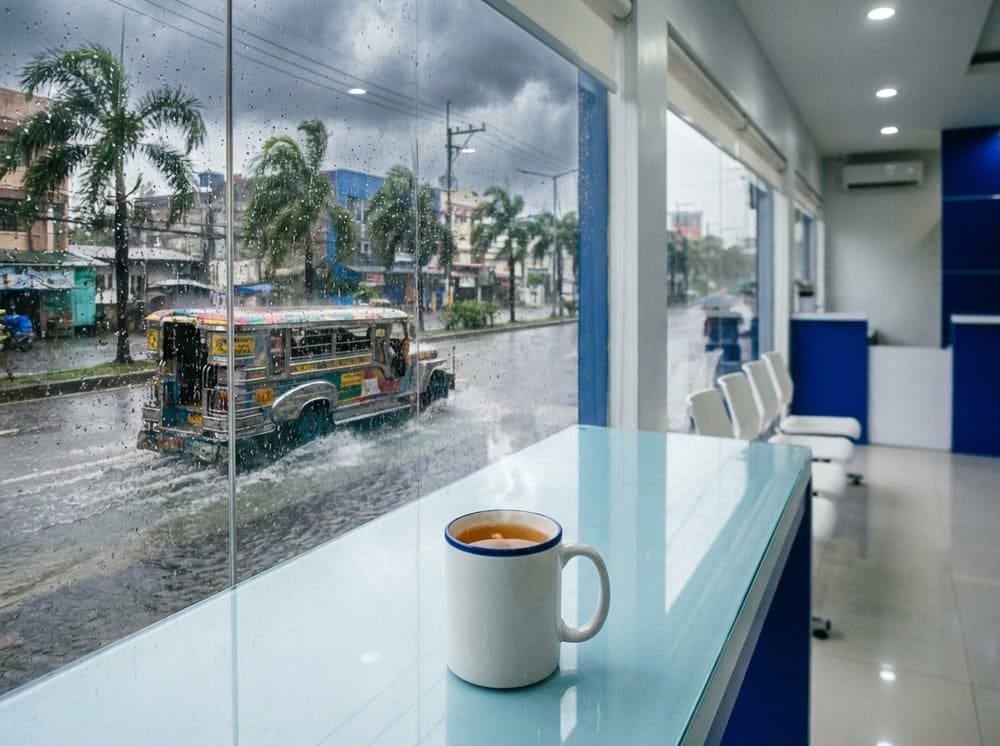
Weather-related joint pain is one of the oldest complaints in medicine. Hippocrates wrote about it. Your lola almost certainly has an opinion about it. For most of the twentieth century, the medical profession dismissed it as folklore, which did not stop several hundred million patients worldwide from continuing to notice, accurately, that their joints hurt more when the weather turned. The research has finally caught up: multiple controlled studies now demonstrate a small but reproducible association between drops in barometric pressure, rising humidity, and self-reported pain scores in people with osteoarthritis, rheumatoid arthritis, and fibromyalgia.
The effect is modest. It will not turn a good day into a disaster by itself. But in a country where the wet season lasts from roughly the first week of June to late November, a modest effect compounded over 150 days adds up to a meaningful change in quality of life. And, importantly, it is mostly manageable.
What actually happens inside the joint
Three mechanisms do the work.
Barometric pressure drops. A low-pressure weather system — the kind that precedes a habagat squall or a typhoon — lowers atmospheric pressure by 10–30 hectopascals over the course of a day. The pressure inside a joint capsule is roughly balanced against the pressure outside it. When outside pressure drops, the relative pressure inside the capsule rises, and the tissues — cartilage, synovium, surrounding ligaments — expand very slightly. In a healthy joint this is undetectable. In a joint where the capsule is already chronically inflamed and the pain receptors are already sensitised, the expansion is enough to provoke nociceptive firing. Patients often describe this as "feeling the rain coming" because the pressure change precedes the storm by 12–24 hours.
Synovial fluid viscosity changes. Synovial fluid is non-Newtonian — its viscosity depends on both temperature and shear rate. In cooler, damper weather, the fluid is thicker, and the lubrication of the joint is slightly less efficient. This contributes to the classic "stiffer first thing in the morning" complaint that patients notice is dramatically worse in the wet season.
Behaviour changes. This is the one that nobody wants to hear but which usually matters most. When it is raining, people walk less, take fewer stairs, skip their exercises, and eat different food. A week of reduced activity during a habagat rainfall will stiffen any arthritic joint, regardless of what the barometer is doing.
Why Philippine patients feel it more than most
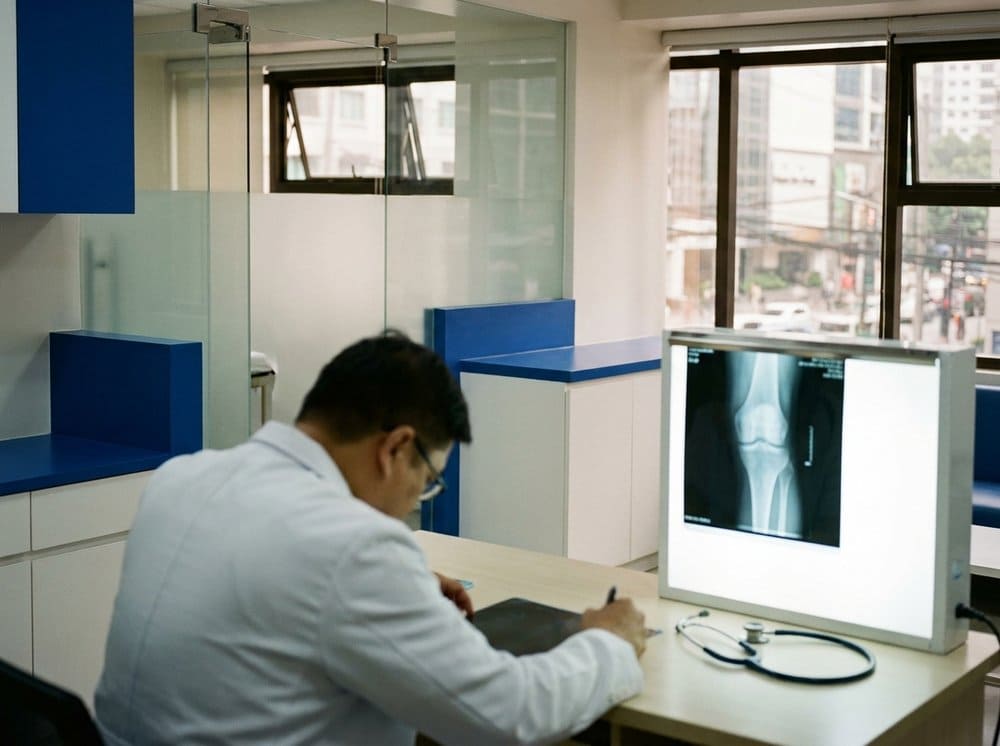
The combination of high humidity, frequent typhoons (an average of 20 per year enter the Philippine Area of Responsibility, with 8–9 making landfall), and a rainy season that runs six months is essentially a long, cumulative stress test for arthritic joints. The amihan dry season, December to May, is when most of our chronic patients feel their best — and the transition months, especially late May and early June, are when flares pile up in our schedule. If you are unsure what baseline grade of arthritis you are working with, our summary of the Kellgren-Lawrence X-ray grades is a useful starting point, because Grade I and II patients respond to weather very differently from Grade III and IV.
What actually helps
1. Warm compresses, twice a day
Fifteen minutes of warm compress — a hot-water bottle wrapped in a towel, or a gel pack microwaved until warm — raises local tissue temperature, reduces synovial fluid viscosity, and eases guard-muscle spasm. Do it first thing in the morning and again in the evening. Avoid sleeping on a heating pad; sustained heat overnight dehydrates skin and provides no additional benefit.
2. Maintain the movement programme, especially on the days you least want to
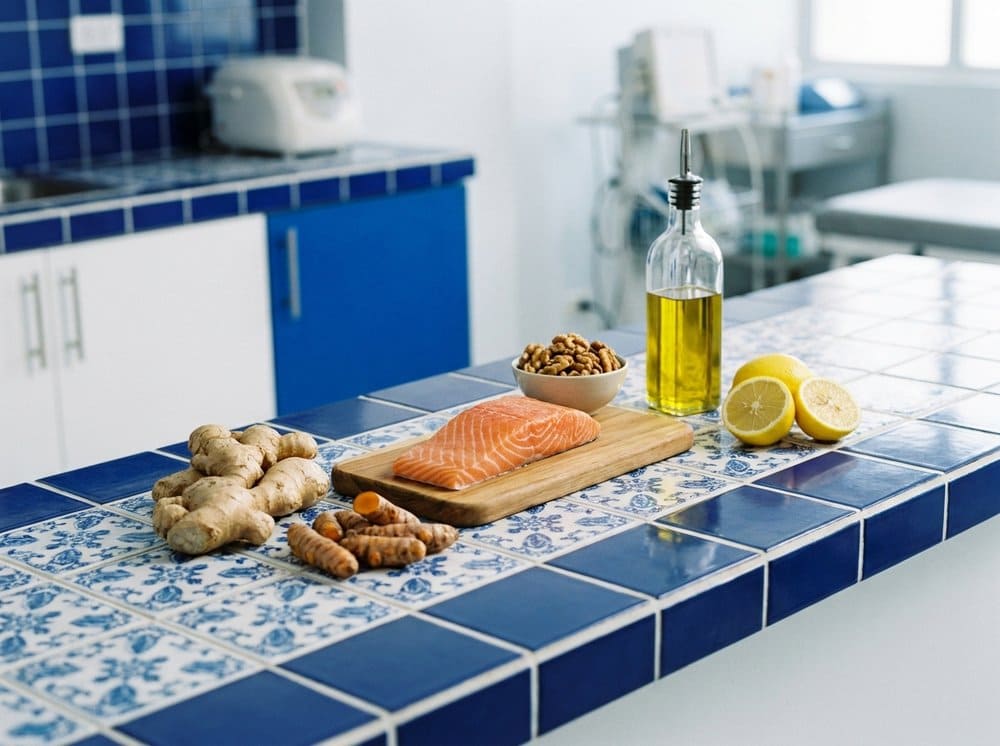
The single biggest predictor of whether a patient gets through monsoon season well is whether they kept moving. Our anti-inflammatory food guidance works better when combined with daily motion; the reverse is also true. If heavy rain means you cannot walk outside, do the ten-minute routine from our home program inside. A warm-up, three times through a set of five exercises, ten minutes total. The habit is what protects you.
3. Stay ahead of flares with planned injections, not reactive ones
For patients who reliably deteriorate in the rainy season, we often schedule an intra-articular injection in mid to late May — before the habagat rains begin rather than after. This is especially effective for Grade II–III knee OA patients who get hyaluronic acid: a three-week series timed to start in early June gives them six to eight months of protection that carries them through to December.
4. Dress the joint, not just the weather
A thin knee sleeve — the simple neoprene kind from any drugstore for ₱300–500 — does two things: it keeps the joint marginally warmer, and the gentle compression provides proprioceptive feedback that reduces the sense of instability many patients report in wet weather. It is not a brace and does not correct biomechanics; it is a comfort device that happens to work.
5. Hydrate more, not less
Patients often drink less when it is cool and cloudy, mistaking the absence of sweating for the absence of fluid loss. Cartilage is 70% water; dehydrated cartilage is stiffer cartilage. Eight glasses of water a day during the monsoon are not optional — they are part of treatment.
"The aches of the rainy months are not imagined. They are a small, repeatable consequence of pressure and temperature acting on tissue that has already been changed by arthritis."
What does not help
- Moving to a "dry" climate. Longitudinal studies show patients who relocate report symptom relief for about six months, after which the baseline returns. The disease travels with the patient.
- Copper bracelets and magnetic insoles. Multiple randomised trials have shown no effect beyond placebo.
- Stopping exercise because of the weather. This is the single most common self-inflicted cause of a monsoon flare.
- Doubling NSAIDs on bad-weather days. Gastric and renal side effects are not weather-dependent, and they stack quickly across a six-month season.
When to call the clinic
Monsoon ache is diffuse and predictable. If your pain is sharp, new, localised to one spot, associated with a visible swelling that was not there the previous week, or accompanied by warmth and redness, it is not the weather — it is a flare that needs assessment. For patients already in our rehabilitation follow-up programme, message your assigned physiotherapist; for new concerns, book a consultation. The rains are not a reason to wait.